
Skip to content
Request a Quote
Process Explainer

What Is Heavy-Gauge Thermoforming?

Heavy-gauge thermoforming uses plastic sheet typically .060 inches or thicker to produce durable, structural components for industrial, transportation, agricultural, and OEM equipment. Floe Thermoforming runs starting gauges up to .600 inches on vacuum forming and .400 inches on pressure forming, the heaviest gauges publicly offered by any US contract thermoformer.

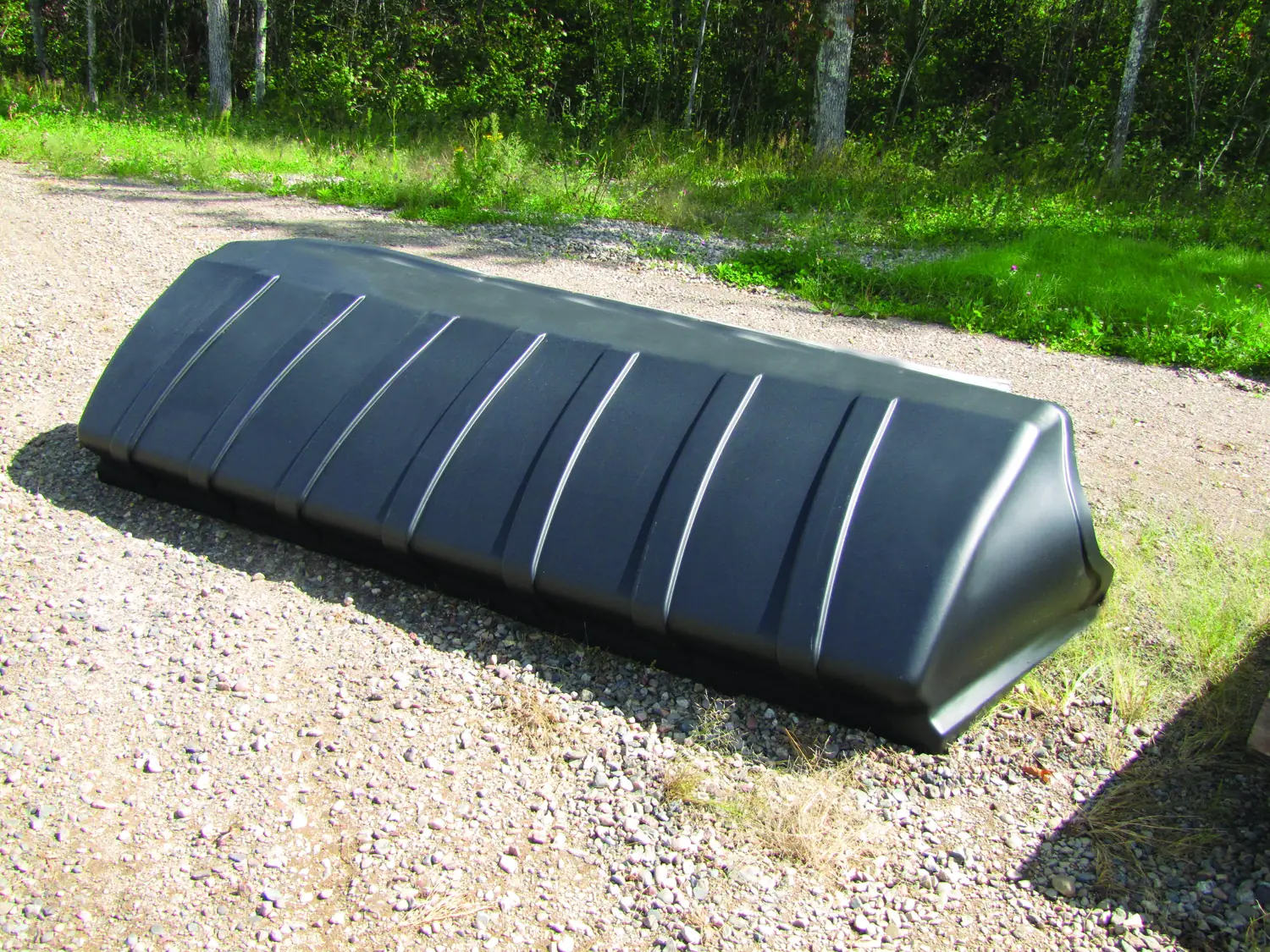
Heavy-gauge thermoformed structural part on the Floe Thermoforming floor

Heavy-gauge vs. thin-gauge

Thin-gauge (roll-fed) thermoforming makes cups, trays, and blisters from thin film under .060". Heavy-gauge (cut-sheet) thermoforming processes thick sheet, .060" and up, into structural, load-bearing parts.

The two are different industries. Heavy-gauge competes with sheet metal, fiberglass, and welded assemblies, not packaging.

What it's used for

Hoods, shrouds, enclosures, panels, fairings, liners, and housings across heavy equipment, agriculture, transportation, marine, recreation, and RV. Anywhere an OEM needs a big, tough, repeatable part without injection-molding economics.

Materials and gauge

Standard resins include HMWPE/HDPE, ABS (monolithic and COEX), TPO (monolithic, COEX, FR), and PC/ABS. Floe Thermoforming forms starting gauges up to .600" on vacuum forming and .400" on pressure forming.

Related capability

Heavy-Gauge Thermoforming

Explore the capability
FAQ

Questions OEM engineers ask

How thick is heavy-gauge thermoforming sheet?

Heavy-gauge generally starts around .060 inches and runs up. Floe Thermoforming forms starting stock up to .600 inches on vacuum forming, the heavy end of the structural range.

What's the difference between heavy-gauge and thin-gauge?

Heavy-gauge (cut-sheet) processes thick sheet into structural parts; thin-gauge (roll-fed) processes thin film into packaging. They're separate disciplines on different equipment.

Is heavy-gauge thermoforming structural?

Yes. At .060", .600" gauge, heavy-gauge thermoformed parts replace sheet metal, fiberglass, and welded assemblies in load-bearing applications.

About the author

Jon Novitt

Jon Novitt is Vice President of Thermoforming at Floe Thermoforming, a division of FLOE International. He has spent 28 years in B2B manufacturing, including 19 years in thermoforming tooling, and leads engineering and production for heavy-gauge, large-format OEM programs in McGregor, Minnesota.

Request a Quote

Send us the part. We'll tell you how to build it.

Upload your drawing or describe the program. NDA-friendly. We review every RFQ ourselves, response within 1 business day.