
Replace Fiberglass.
Replace Metal.
Yes. Heavy-gauge thermoplastic typically replaces fiberglass and metal parts with lower weight, lower per-part cost at production volume, color throughout the wall (eliminating paint), formed-in texture, and dramatically greater part-to-part repeatability. Floe Thermoforming converts hand-laid and welded assemblies into single-piece thermoformed components.
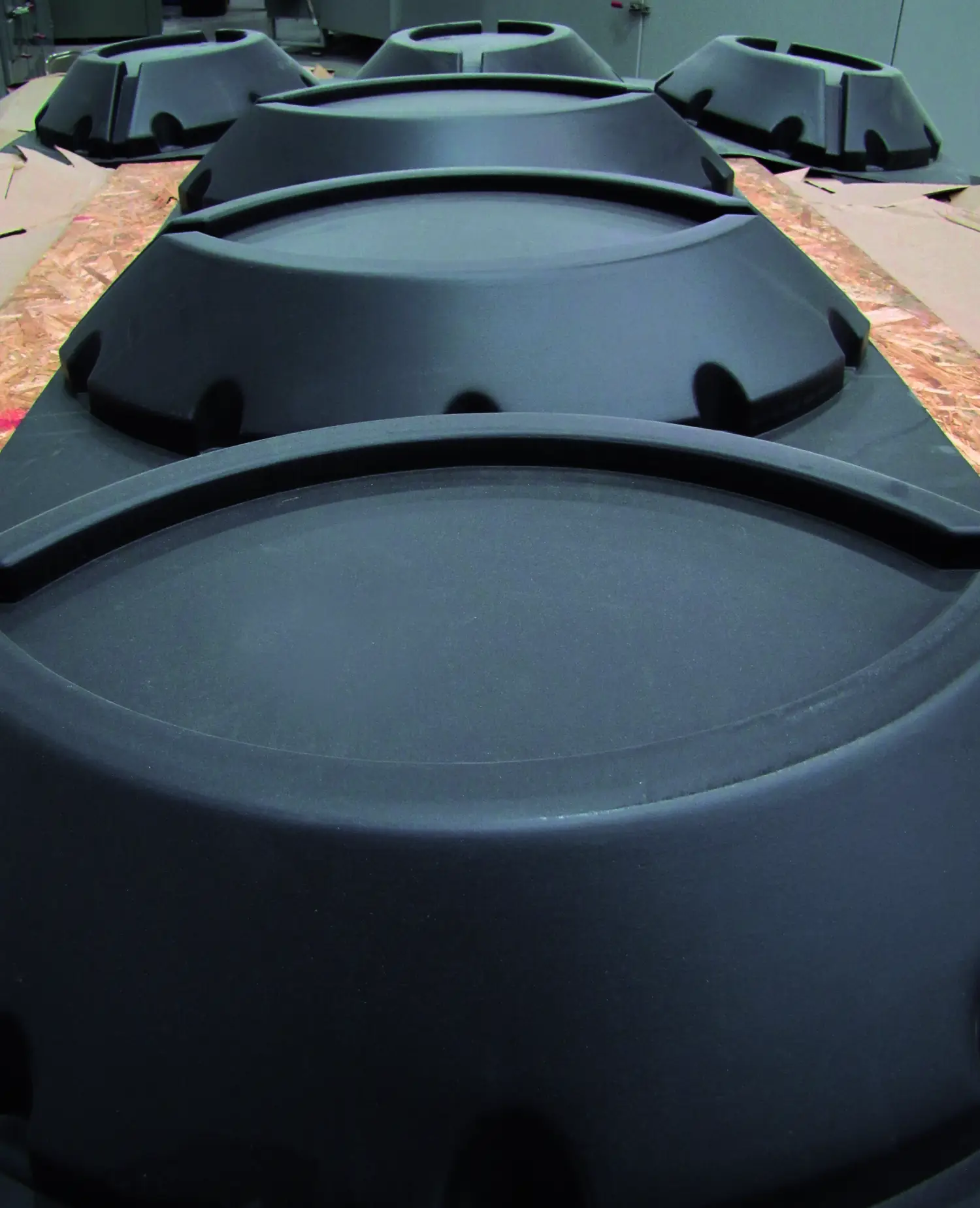
Fiberglass to thermoplastic
Hand-laid fiberglass is labor-heavy, hard to keep dimensionally consistent, requires paint and finishing, and carries VOC and shop-environment overhead. A heavy-gauge thermoformed replacement is formed in a controlled cycle with repeatable wall thickness.
Color and texture mold in, so the paint line disappears. Part-to-part variation collapses. And at 1,000+ unit annual volume, tooling typically pays back inside the first production year.
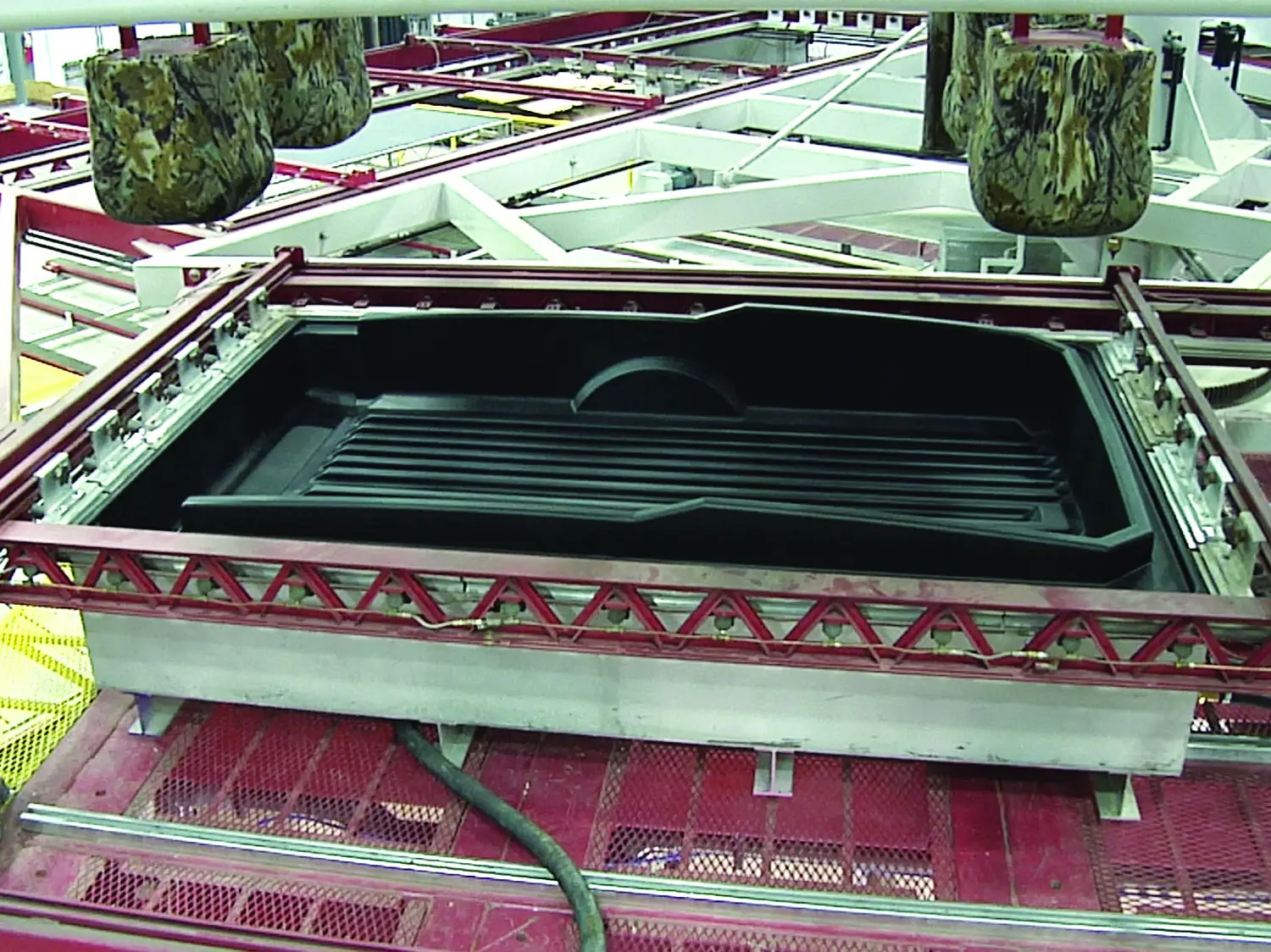
Metal to thermoplastic
Stamped-and-welded metal panels and enclosures convert to lighter, corrosion-immune, single-piece thermoplastic parts, hoods, side panels, roof caps, shrouds, and housings are common targets.
Multi-piece welded assemblies collapse into one molded part with features built in, cutting fasteners, welds, and assembly labor. Typical weight reduction runs 30-50% versus equivalent stamped or welded metal.
How a conversion program runs
Every conversion goes through DFM so the new part is designed for the forming process, not just copied from the old geometry.
-
01
Part & business review
We look at the current part, its cost, its assembly, and the annual volume to confirm conversion makes sense.
-
02
DFM redesign
Draft angles, radii, undercuts, and integrated features are engineered for thermoforming.
-
03
Material selection
The resin is matched to structural, UV, impact, chemical, and surface requirements.
-
04
Tooling strategy
Good/better/best tooling matches investment to program stage and volume.
-
05
Validation & launch
First-article validation, then industrialization and production ramp.
Questions OEM engineers ask
Can thermoforming replace fiberglass?
Yes. Heavy-gauge thermoplastic typically delivers lower weight, lower per-part cost at production volume, color throughout the wall (eliminating paint), formed-in texture, and dramatically greater part-to-part repeatability than hand-laid fiberglass. Multi-part fiberglass assemblies often consolidate into a single thermoformed part.
Can thermoforming replace sheet metal?
Yes. Heavy-gauge thermoforming replaces stamped and welded metal panels and enclosures with lighter, corrosion-immune, single-piece thermoplastic parts. Common targets include hoods, side panels, roof caps, enclosures, and structural housings.
What is the typical ROI on a fiberglass-to-plastic conversion?
ROI depends on annual volume, part complexity, current paint and finishing costs, and assembly part-count. Programs at 1,000+ unit annual volume typically see tooling payback within the first production year through reduced per-part cost, eliminated paint operations, and consolidated assembly steps.
How much weight does a metal-to-plastic conversion save?
Weight savings depend on the specific part and material, but heavy-gauge thermoplastic typically delivers 30-50% weight reduction over equivalent stamped or welded metal, with substantial reductions in fastener count and assembly labor.
What volume justifies a conversion program?
Floe Thermoforming is built for 1,000+ unit annual production volumes. At that scale, the combination of consolidated tooling, eliminated paint, and reduced assembly labor typically delivers tooling payback within the first production year.
Does conversion require redesigning the part?
Yes, every conversion goes through Floe Thermoforming's DFM (design for manufacturability) review to adjust draft angles, radii, undercuts, and integrated features. Our engineering team partners with your team during this phase at no charge as part of the program management process.
Send us the part. We'll tell you how to build it.
Upload your drawing or describe the program. NDA-friendly. We review every RFQ ourselves, response within 1 business day.